Cape Town’s new water projects receive in-principle approval for PPP model


The procurement phase for the Faure New Water Scheme (FNWS) and Paarden Eiland Desalination Plant (PEDP) is set to start in 2026, after the City of Cape Town’s public-private partnership (PPP) model was, in principle, approved by the Council.
Based on the separate feasibility studies, a PPP model was supported as the most suitable model to use for these two complex projects.
Over 100 comments were received for each project during the public participation sessions held in 2025 for both projects, which were incorporated in the feasibility reports that were recommended to Council for their decision.
“I am pleased that this crucial step has now been concluded. In 2026, we will commence the procurement phase of the FNWS and PEDP. By undertaking these projects through a PPP, the City of Cape Town will remain the infrastructure owner and responsible for providing safe, high-quality drinking water,” explained City of Cape Town Water and Sanitation MMC Councillor Zahid Badroodien.
This implementation model will also create economic and employment opportunities through construction, operations and supply of equipment and chemicals.
This approval is another important step to building Cape Town’s water-secure future, through the implementation of the City’s New Water Programme, which aims to diversify water sources, including water reuse, desalination, clearing invasive species and groundwater extraction to add 300-million litres of water a day to Cape Town’s supply soon after 2030.
The FNWS aims to add between 70-million and 100-million litres of purified, recycled wastewater a day to the water supply, with first water expected in financial year 2030/31.
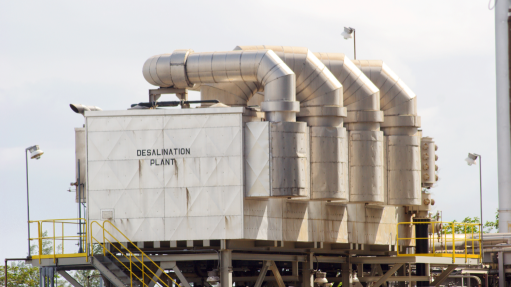
The PEDP involves removing salt from seawater to yield between 50-million and 70-million litres a day with first water forecasted for financial year 2030/31.
The procurement process for the PPP will follow a two-stage competitive bidding process.
The request for qualification (RFQ) stage will invite interested parties to demonstrate their technical capability to deliver the project. This is scheduled to be advertised in the second half of 2026.
This will be followed by a request for proposal, with shortlisted bidders from the RFQ stage invited to submit detailed proposals. This is expected in the second half of 2027.
“This approach ensures transparency, competitiveness and alignment with the City’s Supply Chain Management policy and requirements.”
Through the PPP model, the City of Cape Town will harness private-sector expertise and innovation while maintaining firm public ownership.
“Every litre of water, every pipe and every pump remains the property of our city. This is progress built on trust, delivering jobs, economic opportunity and the certainty our residents and businesses deserve,” said Badroodien.
He explained that a PPP is a formal, regulated arrangement where the private sector helps deliver a function that the city would normally perform, such as designing, building and operating a water treatment plant.
The city sets the output specification on what must be delivered, at what quality and at what volume, while the private partner designs, builds, finances and operates the project for a defined period.
The city only pays if the private partner meets the required performance standards.
The infrastructure remains city-owned throughout, and the responsibility to provide clean water to end-users remains with the city throughout.
“A PPP is not privatisation. It is a tightly regulated partnership, not a sale of public water services. It does not involve selling city water assets. It does not hand over ownership or long-term control of public water services to private companies and it does not allow private operators to set water tariffs or run water services independently.”
PPPs transfer significant project and operational risk to the private sector and must meet strict tests for affordability, value for money and risk transfer.
The private sector brings capital, skills and long-term operational capacity while the city retains ownership and regulatory control.
Article Enquiry
Email Article
Save Article
Feedback
To advertise email advertising@creamermedia.co.za or click here
Research Reports
Projects

Latest Multimedia
Latest News


Showroom
Your global lifecycle technology & service partner for materials & minerals processing equipment for coal, iron ore, copper, manganese & other...
VISIT SHOWROOM
As a reticulator, Egoli Gas provides natural gas to homes and businesses via underground pipes.
VISIT SHOWROOM


Announcements
What's On
Subscribe to improve your user experience...
Option 1 (equivalent of R125 a month):
Receive a weekly copy of Creamer Media's Engineering News & Mining Weekly magazine
(print copy for those in South Africa and e-magazine for those outside of South Africa)
Receive daily email newsletters
Access to full search results
Access archive of magazine back copies
Access to Projects in Progress
Access to ONE Research Report of your choice in PDF format
Option 2 (equivalent of R375 a month):
All benefits from Option 1
PLUS
Access to Creamer Media's Research Channel Africa for ALL Research Reports, in PDF format, on various industrial and mining sectors
including Electricity; Water; Energy Transition; Hydrogen; Roads, Rail and Ports; Coal; Gold; Platinum; Battery Metals; etc.
Already a subscriber?
Forgotten your password?
Receive weekly copy of Creamer Media's Engineering News & Mining Weekly magazine (print copy for those in South Africa and e-magazine for those outside of South Africa)
➕
Recieve daily email newsletters
➕
Access to full search results
➕
Access archive of magazine back copies
➕
Access to Projects in Progress
➕
Access to ONE Research Report of your choice in PDF format
RESEARCH CHANNEL AFRICA
R4500 (equivalent of R375 a month)
SUBSCRIBEAll benefits from Option 1
➕
Access to Creamer Media's Research Channel Africa for ALL Research Reports on various industrial and mining sectors, in PDF format, including on:
Electricity
➕
Water
➕
Energy Transition
➕
Hydrogen
➕
Roads, Rail and Ports
➕
Coal
➕
Gold
➕
Platinum
➕
Battery Metals
➕
etc.
Receive all benefits from Option 1 or Option 2 delivered to numerous people at your company
➕
Multiple User names and Passwords for simultaneous log-ins
➕
Intranet integration access to all in your organisation